The $50 Mistake You Make Claiming Free Robux Online
Discover how third-party currency offers lead to unexpected fees and account compromise, and learn how to safely navigate official platforms.
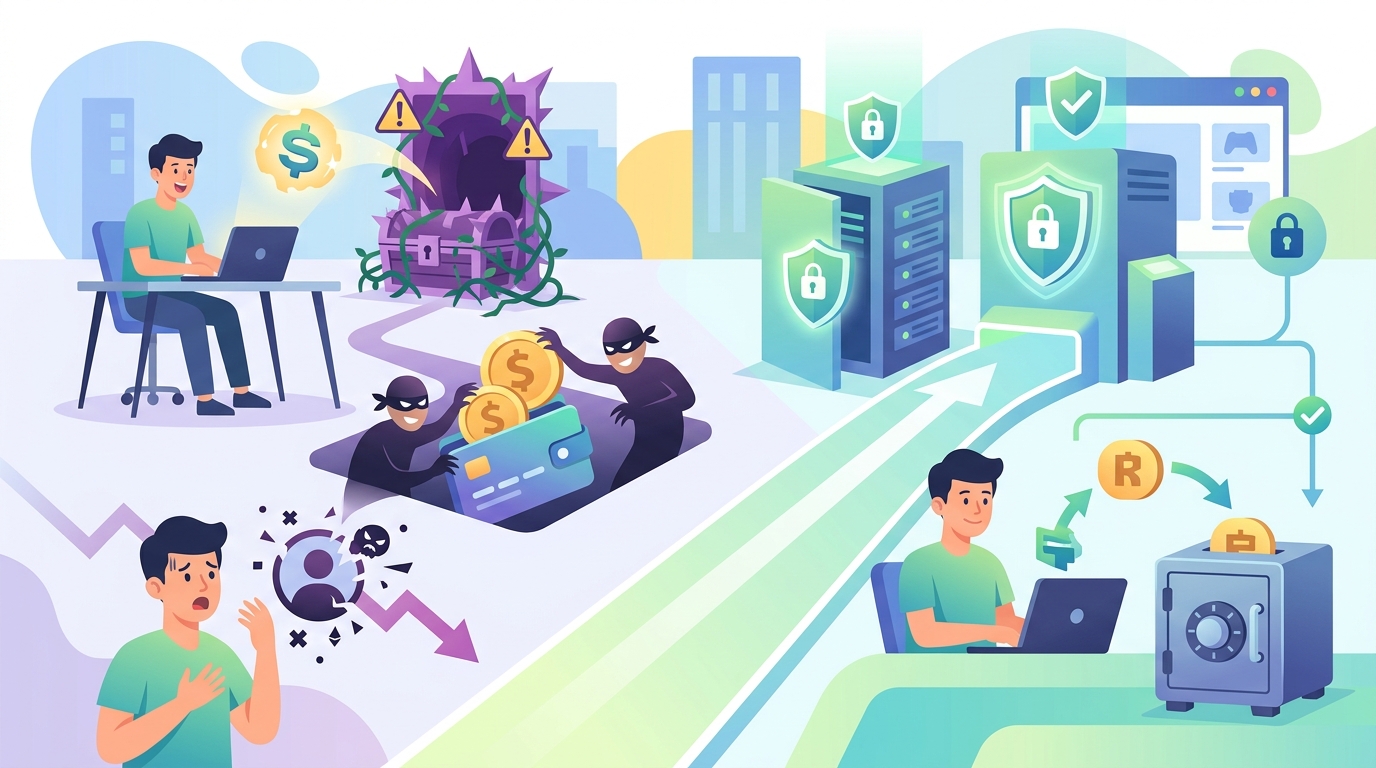
Claiming free virtual currency through third-party websites often exposes players to unintended costs and security risks. A single wrong step on an unverified platform can lead to compromised accounts or recurring billing charges totaling $50 or more.
The Hidden Trap Behind Free Currency Generators
Many players attempt to expand their virtual balance by visiting external websites that promise free Robux in exchange for short surveys or app downloads. Federal consumer protection materials highlight that third-party platforms requesting account credentials or payment information frequently operate as deceptive lead-generation schemes or identity traps (Source 1). Instead of delivering in-game currency, these forms collect user data and redistribute it to commercial marketing networks.
When users enter personal details into non-official portals, they risk having their gaming accounts taken over by unauthorized parties (Source 1). Scammers can alter recovery email addresses and clear out existing account balances before the owner realizes what happened.
Next, let us examine how unexpected recurring fees transform a minor interaction into a costly monthly expense.
How Unauthorized Charges Equal a $50 Surprise
Entering credit card numbers or completing verification hurdles on non-official sites frequently signs users up for hidden subscription services without clear consent. Federal financial monitoring reports indicate that deceptive billing setups routinely hide ongoing fee terms within long agreements or obscured text blocks (Source 2). A user who expects a free offer or a minimal authorization charge may quickly see $15 to $50 in recurring monthly fees added to their statement.
These recurring costs often appear under unfamiliar corporate names, making them hard to recognize on routine bank statements (Source 2). By the time an account holder spots the charges, multiple billing cycles may have already passed.
Keep reading to learn how official platform policies differ from these third-party promises.
Official Platform Rules Versus External Claims
Official platform guidelines explicitly state that in-game currency can only be acquired legally through the official application, the main portal, or approved physical retail cards (Source 1). Federal oversight agencies warn that any site claiming to generate currency through external software programs violates basic terms of service and presents severe security risks (Source 1). Accounts linked to generator activity risk permanent termination and loss of all inventory.
Below is a structured breakdown comparing common external claims with their actual operational risks.
Breakdown of Common Virtual Currency Offers
| Offer Type | Claimed Benefit | Actual Hidden Risk | Primary Authority Warning |
|---|---|---|---|
| Online Generators | Unlimited virtual currency instantly | Credential theft and account lockout | FTC online safety guidance (Source 1) |
| Survey Verification Tasks | Free currency after completing surveys | Deceptive recurring monthly subscriptions | CFPB fraud warnings (Source 2) |
| Unapproved Resellers | Discounted currency packages | Financial loss and unfulfilled orders | CFPB consumer alerts (Source 2) |
Real Steps to Safeguard Your Account and Wallet
Protecting personal financial information and mobile devices requires strict adherence to online security rules. Federal guidelines recommend turning on multi-factor authentication across all gaming accounts and setting up password protection for all store purchases on mobile devices (Source 1). These settings prevent unauthorized transactions even if a device is shared among family members.
Parents should review payment permission settings on mobile operating systems to ensure that child profiles cannot approve financial transactions without explicit supervisor sign-off (Source 1). Adding PIN barriers to mobile store accounts stops accidental single-click billing.
Up next, examine the specific visual indicators that help identify fake promotional websites.
How to Spot Phishing Tactics and Deceptive Websites
Phishing websites mirror official branding by using identical logos, fonts, and color schemes to earn user trust (Source 2). Federal financial guidance observes that deceptive platforms often use high-pressure language, such as fake stock counters or urgent countdown timers, to push users into making fast decisions (Source 2). Urgent claims that a reward expires in minutes are standard design tricks used to prevent careful scrutiny.
Key warning signs include web addresses with unusual domain extensions, mandatory requests for account passwords, and prompts requiring downloads of unrecognized executable files (Source 2). Official platforms never ask users for account passwords to process promotions.
Discover what steps to take if you have already shared account details on an unverified site.
Reporting Deceptive Practices and Recovering Lost Funds
If an unauthorized fee appears on a bank card after visiting a currency site, fast action helps reduce total losses. Financial regulatory guidelines recommend contacting your bank or credit card company immediately to contest unauthorized charges and freeze compromised payment methods (Source 2). Prompt dispute filing increases the likelihood of recovering unauthorized debits.
You can also submit reports directly to regulatory agencies like the FTC to help authorities track down and disrupt deceptive digital operations (Source 1). Reporting fraudulent platforms helps build legal enforcement actions against deceptive online schemes.
Can external websites safely grant free Robux?
No. Official policy states that virtual currency can only be obtained through official apps, verified gift cards, or authorized web portals (Source 1). External generators violate terms and pose security risks.
What should you do if an unauthorized charge appears on your statement?
Contact your bank or card issuer immediately to dispute the charge and block further debits (Source 2). You can also report deceptive billing to federal agencies like the FTC (Source 1).
How do third-party sites charge money without clear permission?
Deceptive platforms often hide recurring monthly subscription disclosures in long terms or tiny text, converting single interactions into recurring monthly fees (Source 2).
Sources
- Protecting Kids Online — Federal Trade Commission
- Fraud and Scams — Consumer Financial Protection Bureau
This article is for general information only and is not professional advice. Figures come from public sources and change over time; check the official source before you act.
More from Inside Life Digest
- See If Your Age Setting Qualifies You for 800 Free Robux
- The 30 Percent Fine Print That Cuts Your 1,000 Robux
- How You Can Collect 400 Free Robux Today Without Paying
- The $50 Mistake You Make Claiming Free Robux Online
- Gap Insurance Cost Breakdown: Pricing, Depreciation Curves, and When Coverage Is Necessary
- Long-Term Care Insurance Cost Breakdown: Premiums, Elimination Periods, and Benefit Triggers